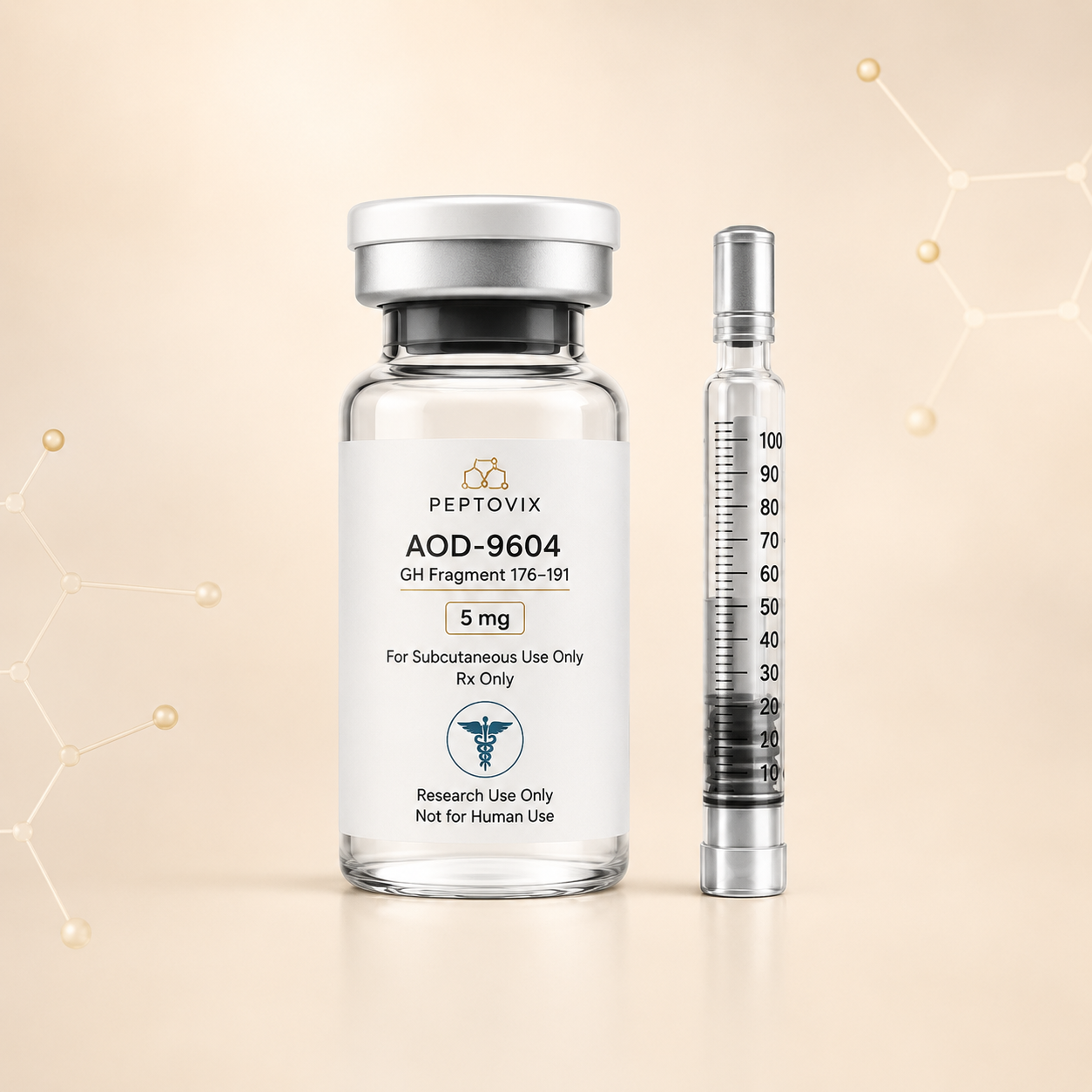
AOD-9604

GH fragment 176-191
A modified fragment of growth hormone that stimulates lipolysis and supports a balanced metabolism, targeting stubborn adipose tissue without affecting blood sugar.

Product price :

د.إ 0.00

Additional information

Directions

SC once daily, cycled.

Key Benefits

Stimulates lipolysis (fat breakdown)
Targets stubborn adipose tissue
Supports a balanced metabolism
Does not impact blood sugar or appetite

03 / More information

More information

What is AOD-9604?

AOD-9604 is a synthetic peptide fragment derived from human growth hormone (HGH). It was developed to study the potential effects of a specific
region of HGH on fat metabolism, without producing the same broad growth-promoting effects associated with full-length growth hormone.


See more

How it works

AOD-9604 has been investigated for its potential ability to influence lipolysis, the process of breaking down stored fat. It has also been studied for its potential to reduce the formation of new fat cells (adipogenesis). Its effects are primarily studied in relation to fat metabolism rather than directly increasing muscle mass.

Research areas

AOD-9604 has been investigated for potential effects involving:

  • Fat metabolism
  • Lipolysis and fat breakdown
  • Reduction of fat-cell formation
  • Body composition
  • Weight-management research

Potential benefits

Preclinical and early research has suggested that AOD-9604 may influence how the body stores and mobilizes fat. However, evidence for meaningful weight loss in humans is limited, and it should not be presented as a proven fat-loss treatment.

Safety

AOD-9604 remains an investigational peptide, and its long-term safety and effectiveness have not been firmly established. Products obtained outside regulated medical or research settings may also vary in purity and composition.

In summary

AOD-9604 is a modified fragment of HGH studied primarily for its potential effects on fat metabolism. Unlike growth hormone itself, it is designed to focus on
pathways related to fat breakdown and fat-cell formation, making it a subject of interest in weight-management research. More high-quality human research is needed to establish its clinical benefits and safety.