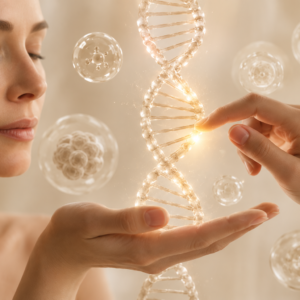
GHK-Cu (Copper Tripeptide-1) is a naturally occurring copper-binding peptide made from three amino acids: glycine, histidine, and lysine. It is best known for research involving skin health, collagen production, wound healing, and tissue repair.
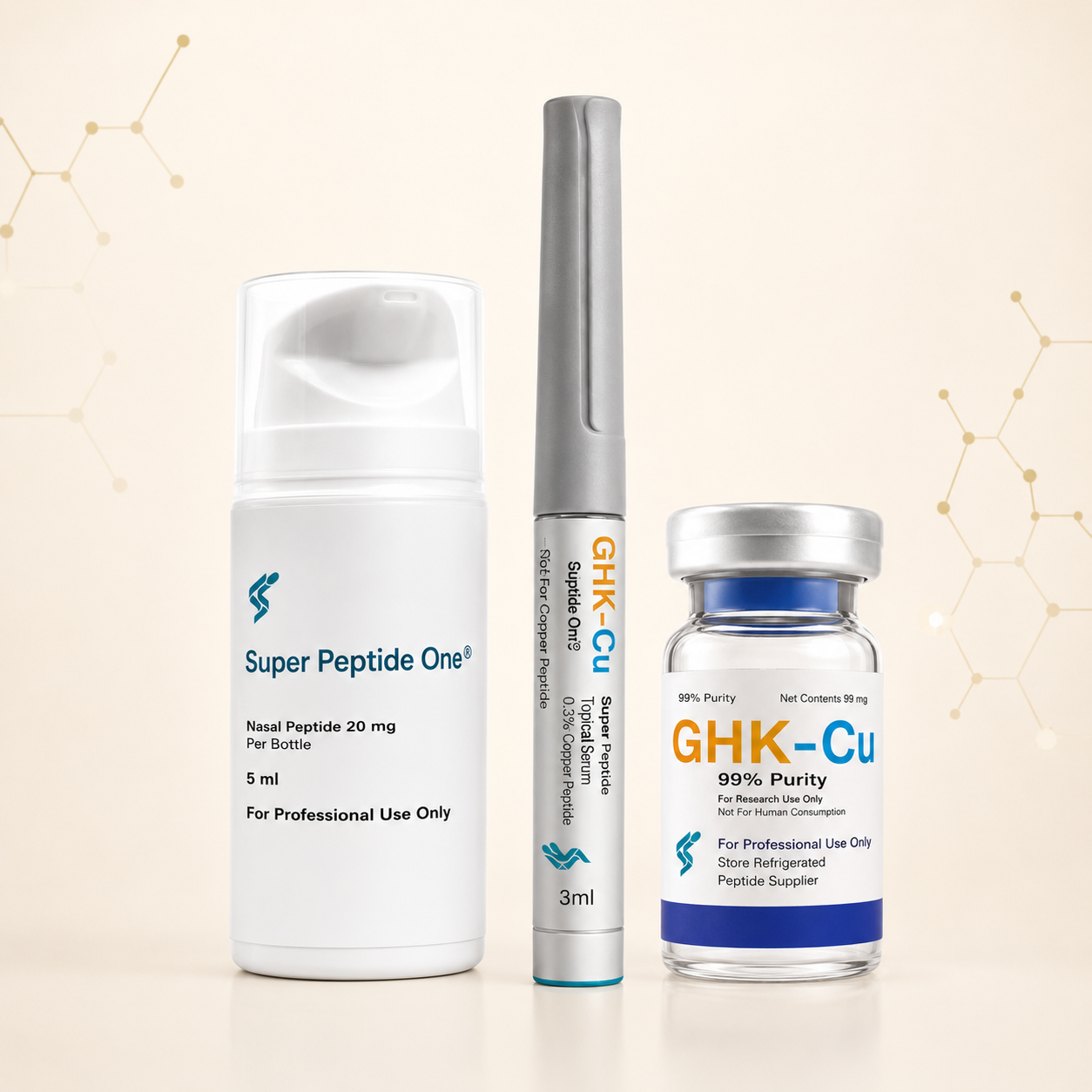
A copper-binding peptide that promotes skin regeneration by stimulating collagen and elastin — improving firmness, elasticity, hydration and hair growth.
Product price :
د.إ 800.00
| Directions | SC 2 mg once daily, 6–12 weeks; or apply topical cream daily. |
|---|---|
| Key Benefits | Stimulates collagen and elastin, reduces wrinkles |
OVERVIEW
GHK-Cu (Copper Tripeptide-1) is a naturally occurring copper-binding peptide made from three amino acids: glycine, histidine, and lysine. It is best known for research involving skin health, collagen production, wound healing, and tissue repair.
AREAS OF INTERESTGHK-Cu has been investigated for potential effects involving:
Topical GHK-Cu has been studied more extensively than injectable forms. The safety and effectiveness of systemic or injectable use are much less established. Products from unregulated sources may also vary in purity and concentration.
GHK-Cu is a copper-binding peptide primarily associated with skin regeneration, collagen production, and tissue repair. It is particularly interesting in cosmetic and regenerative research because of its potential influence on the extracellular matrix and wound-healing processes. More high-quality human research is needed to establish the benefits of different formulations and routes of administration.
We use cookies to improve your experience on our site. By using our site, you consent to cookies.
Manage your cookie preferences below:
Essential cookies enable basic functions and are necessary for the proper function of the website.